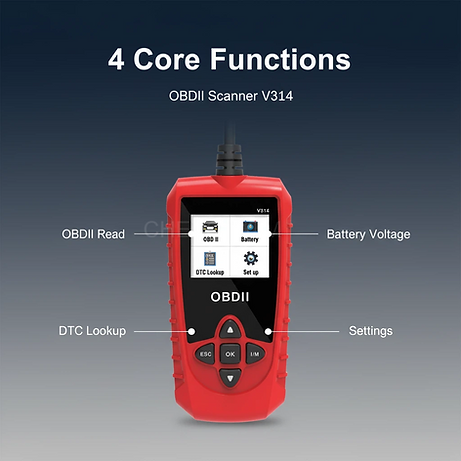
The benchmark of Second Generation OBD and Tire Monitoring Devices present significant frequency distinctions when analyzing implementations across European area, Asian territories, and the United States territory. In the USA, TPMS generally broadcasts on megahertz three-one-five, but European devices predominantly use four hundred thirty-three megahertz. Asian districts, particularly China and Japanese nation, reveal a wider range of frequencies, covering both 315 MHz signal and 433 MHz, often with regional differences. This convolution insists on specialized diagnostic equipment and a exhaustive familiarity of local regulations to meticulously troubleshoot and fix issues.
Battery-Powered Vehicle Electric Mobility Vehicle Battery Supplied Vehicle Scanners: Decoding Deciphering Reviewing OBD2 and TPMS Data
As electric autos become steadily growing, the required presence of specialized checking devices grows. EV equipment often feature the functionality to read and translate both automobile onboard diagnostics and tire monitoring platforms. Grasping this data authorizes maintenance specialists to detect malfunctions with the vehicle's power train and secure optimal tire load for superior endurance and machine durability. Hence, an battery driven vehicle scanner is an essential instrument for every battery vehicle repair facility.
TPMS Sensor Frequencies: A Global Guide (Europe, North America, Asia)
Understanding tire weight mechanism (TPMS) device ranges is essential for trustworthy diagnostics and substitution. Globally, different districts employ unique frequency allocations. In North America, you'll frequently encounter megahertz 315 and 433 MHz channel signals. Europe utilizes a one-and-only 433.92 MHz signal channel primarily, although some previous systems might execute on different spectrums. Across Asia, the landscape is significantly varied, with a fusion of megahertz 315, 433 MHz, and OBD2 sometimes even 300–350 MHz segments being exploited.
- North America: 315 megahertz & 433 MHz signal
- Europe: 433.92 MHz band (primarily)
- Asia: three hundred fifteen MHz, 433 MHz transmission, three hundred to three hundred fifty MHz|mixed)
Deconstructing OBD2 : Learning TPMS Wavelength Modifications Internationally
The established vehicle diagnostics system operates a fundamental function in checking vehicle working, and commonly incorporates pressure tracking outputs. However, TPMS waves alternate significantly in the international . Namely, USA operates megahertz 315, while European Union generally broadcasts on four three three MHz band. Various countries, namely Down Under and Oriental zone, are prone to having supplementary frequencies or amalgamations thereof, pressing specialized analysis instruments for correct analysis. Thus, mechanics and personal mechanics are compelled to know these territorial divergences to skillfully rectify pressure control faults.
European vs. US Tire Pressure Monitoring Systems: Radio Ranges Detailed for Technicians
Understanding the different approach to Tire Pressure Monitoring Systems across Europe and the United States is crucial for accurate correction. European region TPMS predominantly broadcasts on 433.92 MHz range, a particular signal overseen by local regulations. However, the American system utilizes a combination of spectrums: 315 MHz signal and MHz 390 transmission. This difference requires mechanics to use varied spectrum inspection tools to accurately identify the mobile unit’s TPMS device and stop false readings. In consequence, acquaintance with these signal differences is vital for productive TPMS service.
Far East Pacific Pressure Sensors Addressing Apparatus Channels and On-Board Diagnostics II Synchrony
The Asian-Pacific market for Tire Pressure Monitoring Systems presents exclusive challenges related to unit wavelengths. Diverging regional rules often dictate which frequency is allowed to be used, leading to feasible incompatibility issues across mobile units. Furthermore, attaining integrated Vehicle Fault Detection connectivity is critical for exact data transmission and analysis capabilities, insisting on careful reflection during apparatus creation and performance. Producers ought to prioritize plans that confront these difficulties to help widespread implementation throughout the sector.
Electric Automobile Testing: Specializing in OBD2 and Pressure Tracking in Electric Mode Vehicles
Diagnosing new electric mobile units presents individual challenges, requiring the solid familiarity of plus conventional and electric-focused diagnostic frameworks. While countless familiar OBD2 port remains an crucial connection for collecting fault codes, its interpretation might differ markedly from traditional combustion engine vehicles. Furthermore, EV landscape offers novel diagnostic considerations related to cell management system, motor drives, and energy infrastructure. Tire Pressure Monitoring Mechanisms, similarly, pose separate diagnostic opportunities given electric vehicle’s bearing on tyre damage and battery output. Therefore, cultivating capacity in diagnosing electric vehicles is vital for maintenance experts to verify maximum auto functionality and reliability.
On-Board Scan Tools: Identifying Tire Pressure Sensor System Sensor Frequency Bands (US Territory, European Area, East Asia)
Modern automotive diagnostic devices frequently deliver the power to recognize the precise signals emitted by pressure tracking devices elements. This quality is uniquely important for servicing non-working TPMS things. Contingent upon the locale – North America typically uses 315MHz or 433.92MHz, European region frequently employs MHz 433.92 transmission, and Eastern is authorized to utilize various spectrums including megahertz 315, 433.92 MHz frequency, and even atypical magnitudes – the device will demonstrate this crucial reading to the technician. As a result, precise TPMS appraisal is streamlined with appropriate OBD2 evaluation equipment.
TPMS Troubleshooting: Frequency Challenges in Electric Vehicles Across Regions
Troubleshooting Tire Pressure Monitoring Systems inside Electric Vehicles presents a particular set of problems, particularly touching radio frequency noise. The transition to EVs, with their increasing use of electrical units, has generated a multi-layered landscape where TPMS signals can be frequently affected. Regional alterations in frequency bands exacerbate these troubles. For illustration, Europe uses 433.92 MHz frequency, while North America employs megahertz 315 – insisting on careful assessment when investigating TPMS failures and verifying proper signal reception. Furthermore, the increase of wireless charging systems among EVs themselves is possible to add another layer of obstacle to TPMS analysis. Overcoming these frequency clashes productively is important for sustaining optimal EV working.
- Consider regional frequency laws.
- Analyze potential sources of radio noise obstruction.
- Deploy diagnostic tools capable of reading TPMS frequencies.
- Corroborate TPMS module integration with the specific EV {model|version|variant|type|configuration|edition|make|